
Blog › Come, Follow Me Daily Inspiration
July 6, 2026
In 2 Kings 3 Jehoram, King of Israel, unites with Jehoshaphat, King of Judah and the king of Edom to fight against the Moabites, who had rebelled against Israel now that Ahab was no longer king.
In 2 Kings 3 Jehoram, King of Israel, unites with Jehoshaphat, King of Judah and the king of Edom to fight against the Moabites, who had rebelled against Israel now that Ahab was no longer king. As these three kings journeyed towards Moab for seven days, they found no water. Jehoshaphat, being a righteous king who followed the Lord, asked if there was a prophet of the Lord they could inquire of. This is actually the second time Jehoshaphat has joined forces with Israel as a loyal ally and suggested they inquire of the Lord through one of His prophets. He did the same when he joined with Ahab in battle. It's fitting that his name means "God has judged or decided", as he is a great example of letting God lead and decide.
Hearing the king of Judah request to speak with a prophet of the Lord, and perhaps with the recent famine still fresh in mind, one of the servants of the king of Israel suggests going to Elisha, who has taken the mantle of Elijah.
When the kings visit Elisha, he tells Jehoram to go speak to the prophets of his own idols. When Jehoram refuses, Elisha says that if it were not for Jehoshaphat, he would not even look at Jehoram. But because the righteous king of Judah was present, Elisha called for a minstrel to play music (most likely a hymn to invite the Spirit) and then received revelation that the kings should dig ditches and they will be filled with water.
This story echoes a common theme throughout scripture where God spares the righteous despite the wicked. I think of Abraham praying to spare Sodom if the Lord can find only a few righteous, God sparing Noah's family from the flood, and the sparing of Rahab when the Israelites conquered Jericho. This theme is also summarized in the parable of the wheat and the tares (Matthew 13:24-30).
Despite the wickedness of the world around us, we can use our agency to choose to follow our Redeemer. He will give strength to those who diligently seek to follow Him. And just as He would have atoned for every soul even if only one accepted His gift, I am grateful He saves and cares for the few righteous even though many do not follow Him. I am grateful he makes the rain to fall on the just and the unjust. I'm also grateful that just as Christ can turn water to wine, He is able to, with that same transformative priesthood power, turn tares into wheat. Perhaps that is also an (unmentioned) reason in His parable for allowing the tares to grow by the wheat until harvest time.
Yesterday as I read 2 Kings chapter 2 and today as I read 2 Kings chapter 3. I had a hard time coming up with what to write today. I prayed to understand why I wasn't receiving the Revelation that I had been receiving and why I couldn't think of what to write why my mind wasn't open to the words that I should write. I prayed for forgiveness and to know if there were any sins that I was committing that I should focus on. I had come to my mind that I need to be more kind and not say negative things about people about my brothers and sisters. And then as I started reading again I started to write a summary of what I was reading and as I did this the Revelation started coming. As I first started working then the miracle came. I believe this is a true principle in line with the fact that miracles follow Faith. Sometimes to receive revelation, actually anytime we receive Revelation, it comes after we show some form of Faith. For me in writing my gospel thoughts and some of the Revelation that comes to me as I study the scriptures starting to write is the act of Faith that brings down the Revelation from heaven.
More like this
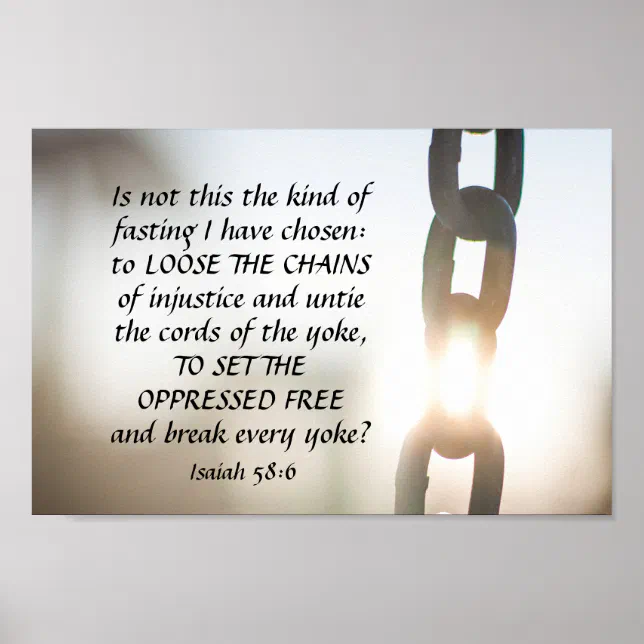
The Power of Fasting (Isaiah 58)
We each have an opportunity to fast at least once a month, but how often do we ponder why we fast and what that fast should look like?
My Work and My Glory (Isaiah 43)
Did you know that Moses 1:39 is the most quoted scripture in General Conference?
A Wonderful Savior (Isaiah 42)
Isaiah 42:3 — A bruised reed shall he not break, and the smoking flax shall he not quench: he shall bring forth judgment unto truth.